Kevin Barrett
[Editor’s note: For more, see “What’s Wrong with Conspiracy Theories?” (17 April 2021),.]
Who’s irrational, the “conspiracy theorists” or the academicians who are paid to attack them with ad hominems, circular arguments, and other fallacies? I’ve opined on this before. Now let’s find out what a genuine expert—sociologist and expert on conspiracy movements Richard Ellefritz—thinks. He’s an assistant professor of sociology at the University of the Bahamas, and the author of numerous articles on this and related topics.
Kevin Barrett: Welcome to Truth Jihad Audiovisual. I’m Kevin Barrett and I’ve been doing this since when Fox News made me too toxic to employ in the academy. So I’ve been pushing back against the dubious portraits of what’s really going on in the world in the mainstream media and academy ever since from outside the academy. But today I’m happy to go back to somebody inside the academy who’s thinking about some of the same things that I think about. That’s Richard Elfritz. He’s a sociologist working at University of the Bahamas who has done participant observation ethnography involving the 9/11 truth movement, which means he hung out with 9/11 truthers and kind of did what they did and observed it just like any other ethnographer would do with a group they were interested in studying. And it’s actually kind of a fascinating topic or confluence of the discipline of ethnography and the 9/11 truth movement. So anyway, I’m really looking forward to this interview. Welcome, Richard Elfritz. How are you doing?
Richard Ellefritz: I’m all right. I’m here in sunshiny Bahamas. It’s been cloudy for the last week. You know, apologies to the tourists, but I’ve been working at the University of the Bahamas since fall as a full-time assistant professor of sociology. Prior to that, I worked three years full-time at Oklahoma State University after I earned my PhD there. So they thought I was doing a good enough job. You know, I love what I do teaching sociology, which is, in my opinion, kind of a natural inroad to investigating what are called conspiracy theories. And yeah, that’s that primarily is how I really got interested in studying the 9/11 truth movement, because one of my primary questions is, why are these people called conspiracy theorists?
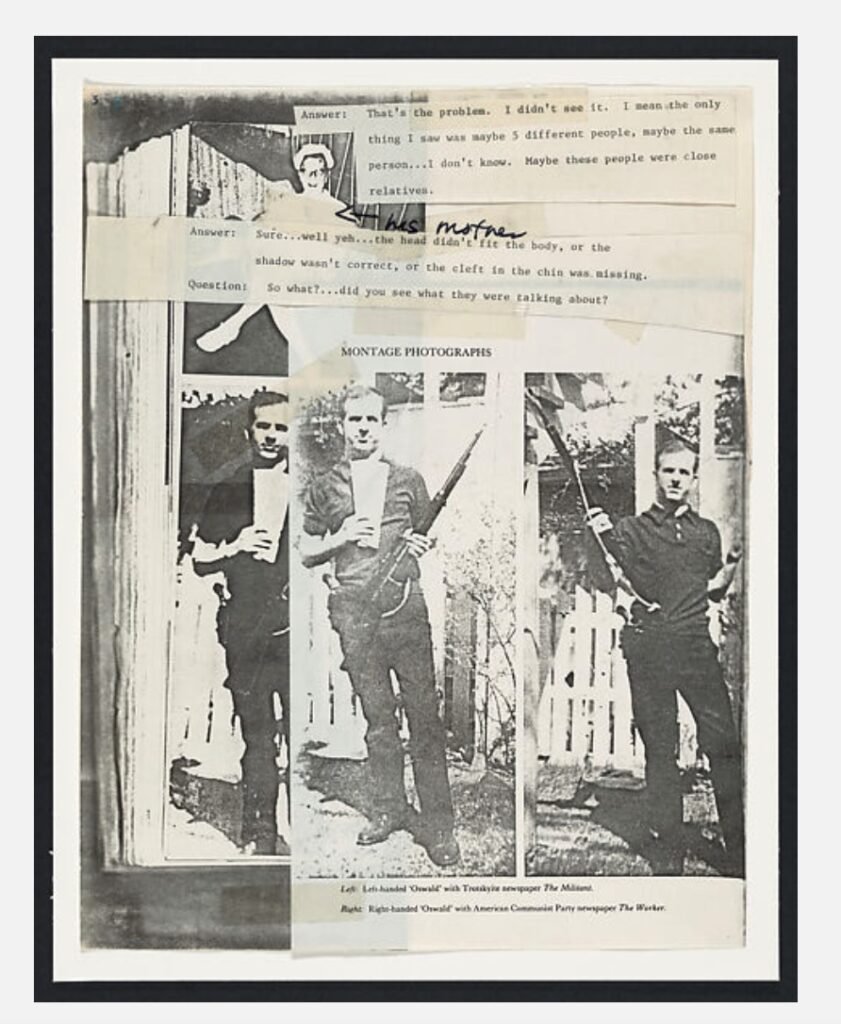
Right. And of course, there are various theories about that, including the infamous CIA memo after the JFK assassination, ordering their media assets to smear people questioning the official story by calling them conspiracy theorists. Is that a conspiracy theory?
Well, there’s a there’s a book called The Stigmatization of Conspiracy Theories Since the 1950s: “A Plot to Make us Look Foolish” (by Katharina Thalmann)…the author doesn’t go far enough. Because as I showed in a series of essays published at PropagandaInFocus.com, the CIA did not coin the term conspiracy theory or conspiracy theorist. And the reason that’s important to say is because, as a matter of fact, those terms do appear in some literature and newspapers prior to the release of that CIA memo 1035-960 to their CIA office chiefs overseas.
And oftentimes I will hear, and in fact, just last week I was correcting somebody on an essay that they’re publishing: You can’t factually say the CIA coined that term. But what you can say is that the CIA no doubt helped to popularize the term, much like Norman Rockwell and Coca-Cola helped to popularize our modern imagery of Santa Claus.
So I think it’s interesting that there’s this academic book out there that claims to have studied the rise of this conspiracy label, as I call it. But then they basically backtrack at a certain point because I think they (Katharina Thalmann) were unwilling, for whatever reason, to just go a little bit deeper. And in my series of essays on the topic, especially in the third installment, I showed that the CIA memo, which anybody can find, very likely led to a regional editorial published by Tom Bethel.
Now, Tom Bethel was a very vocal advocate of the Warren Commission that served as the official story of what happened to JFK in November 1963. There are some other blogs and articles I found that drew suspicion that he had direct ties to the CIA. And so he publishes in a regional news outlet in the northwest, I believe, an editorial that then served as the hypothesis for the first psychology publication analyzing conspiracy theories. And so that was in the late 1970s. And they name him, they name his article, they use his postulation, his conjecture in that article as their hypothesis for their theory that big events lead to big explanations. And that logic then was picked up by psychologists in the future to form part of the foundation of the psychologism of conspiracy theories: the claim that the reason that you’re questioning government’s official explanations is because your psychology just can’t handle the fact they say that big events sometimes have small causes, that a kind of a nobody could assassinate a president, that Islamic jihadist terrorists could pull off something as catastrophic as the events of September 11th. “You see, your psychology just can’t handle this.”

Rumble link Bitchute link TruthJihadRadio link
Never do they explore the empirical evidence. Never do they offer up anomalies like World Trade Center Building Seven. And when they do, for example, in an article called What About Building Seven, they don’t have any time to seriously entertain the peer reviewed publications that analyzed, for example, active thermitic material found in the dust samples of that building. They don’t analyze the physics of the collapse like David Chandler did. So they ignore the strongest empirical claims that are directly made by who they label conspiracy theorists, and rather turn to psychologizing the issue as a way of explaining why it is that some people pose direct questions to the official accounts and narratives.
So what I showed in the third installment of the essay series is that the CIA memo laid out the framework that Tom Bethel proposed in his editorial, that his editorial served as the hypothesis for the first psychology study. And that study then led to a blossoming of other studies that do anything but critically interrogate the many anomalies made in the empirical claims by who they label conspiracy theorists.
And that’s very much in line with the work of Lance DeHaven-Smith, who wrote Conspiracy Theories in America and drew attention to that CIA memo, among other things. And as far as the psychologizing of the conspiracy theorist goes, it does strike me as kind of counterintuitive, this whole notion that people would really much rather believe that their very powerful insiders had blown up the World Trade Center or killed the president, as opposed to believing the official explanations that these nobodies had gotten lucky. It seems to me that in almost all cases when people are faced with a choice of beliefs, they choose the beliefs that a serve their interests the best and are the most pleasant to hold. Beliefs that don’t serve their interests and are unpleasant and anxiety producing are usually avoided. For that reason, I would think the cognitive bias would always be away from the so-called conspiracy theory, except perhaps for a very small subset of people with some unusual factors in their psyches. But who really wants to believe that the United States is governed by these monsters that would do 9/11 and would be able to get away with it? How can anybody seriously argue that psychological argument? It really floors me.
Yeah, and they do. There’s a lot to unpack there in what you said, because I have had a lot to say about all of that. Backtracking through what you’re saying, there are articles published by psychologists that they say show that quote unquote conspiracy theorists want to feel like they’re special, that they have special access to knowledge that the public just doesn’t have. Well, no, that’s not true because most of the 9/11 truthers that I interviewed in Manhattan on September 11 anniversaries are out there in the streets demonstrating with their signs and their placards and their t-shirts and the billboards that they put up. (They’re doing) advocacy of truth to the general public. So if they wanted to feel special in their knowledge why are they sharing it with as many people as they possibly can?
Secondly the psychologists say “these ‘conspiracy theorists’ feel more safe and secure knowing that the world is in control by some global network of nefarious elites.” And I’m like, really? Once again, the data I gathered from interviews shows that when when my participants had their conversion experience, let’s say when they woke up due to something like recognition that World Trade Center Building Seven was an indicator that they had been lied to about the events of September 11th, they experienced depression, anxiety, loss of appetite, loss of sleep, disruptions to their personal social relationships,disruptions to their occupation, a sense of panic and dread.
So the psychologists are saying “conspiracy theorists feel safe and secure believing that the world is under control when in fact the world is in chaos and global anarchy.” And my data directly contradict that. Most people that I’ve interviewed who woke up to 9/11 told me that they couldn’t sleep for weeks. They were in a dread panic. And I understand that because that’s the same thing that I went through.
Now, older members of the 9/11 Truth Movement that I interviewed had already woken up to JFK. A lot of them said that they had already been questioning the Warren Commission report. Some of them said that they they just initially believed the official story of September 11th, because why wouldn’t you? And then others were immediately skeptical, like: “So I had already been questioning things in the past. And so I was immediately skeptical.”
For for that vein, what the psychologist will say is that that is the problem of conspiracy theories is that they spread endemically through society causing people to question all of social reality. In some cases that’s very true. Joe Rogan in his comedy special said before the the covid pandemic he fully believed in vaccines. And then after the covid pandemic he he was questioning whether or not we went to the moon. Now that’s Joe Rogan. And certainly there are people who start questioning everything around them. But that’s because…it’s kind of like if a small child finds out that Santa Claus doesn’t exist, they can say, “what else are they lying about? Does the tooth fairy exist? Does the Easter bunny exist? What else have you been lying about?”
And, you know, that’s kind of a natural process. If you find out that your spouse has been cheating on you, well, what else have you been doing that I don’t know about?
So why wouldn’t we begin to question other aspects of our reality if we find out that information about the events of September 11th were withheld, such as World Trade Center 7? What else about that event were they lying about? And what else about history might have been, let’s say, let’s put it politely, misconstrued?
So going back to what you’re saying, there are literally hundreds of peer reviewed publications by psychologists analyzing every dimension and facet of conspiracy beliefs. And I can go through and reinterpret their findings based upon my own findings and interviews. But I also can reinterpret their findings to say that, “well, I think maybe what you’re tapping into is the type of critical thinking and psychological fortitude and resilience that equips certain types of people to entertain the possibility that they’ve been lied to about these big events, and then to work through that to a point where they begin to take it upon themselves to become what Katherine Olstein called ‘citizen sleuths.’”
There are a lot of people in the world today who are alert and vigilant. In the American ethos this was spelled out in the Declaration of Independence. This is the logic behind the Bill of Rights and the First Amendment. And JFK pointed this out in his famous “president and the press” speech where he told the press and his audience that they had the tremendous responsibility to alert the citizenry of some of the dark operations or deep politics, as Peter Dale Scott would say, of what was really going on. That it’s the function of the press to be the watchdog, to be the fourth estate, and that we can’t have self-government without that.
So why wouldn’t we celebrate citizens taking it upon themselves to investigate and question authority? Well, going back further into what you were talking about, we have social apparatuses that we could call state ideological apparatuses, which comes out of the work of Louis Althusser.And the way that I look at it is, you have mass education, which conditions the human mind over time to accept as normality that there will be an authority who has the answers, there will be an authority who has the questions, and that they are kind of in command of the knowledge structure.
And for decades, we had basically three news stations in the United States, ABC, CBS, NBC, Walter Cronkite being the most trusted person. We had The New York Times as the paper of record, which famously published Daniel Ellsberg’s whistleblowing on the Vietnam War. And for a lot of people over time, they trusted the news. And if you don’t trust Walter Cronkite, then you got Tom Brokaw or Dan Rather or something like that: Dan Rather saying on the morning of 9/11 “these buildings” talking about World Trade Center “it looks like a classic demolition, that it came down due to well-placed dynamite.”
So for me, you know, the question isn’t about why are people questioning the world around them? It’s why aren’t more people questioning the world around them? And so that’s where we get back to what you were alluding to in terms of psychological biases. And this is a well-known term among the 9/11 truth and other quote-unquote conspiracy communities: cognitive dissonance. There’s a really great paper published by the psychologist Laurie Manuel in a special issue of American Behavioral Scientists that was organized by Lance DeHaven-Smith. And Laurie Manuel’s article, “In Denial of Democracy,” spells out how cognitive dissonance works in terms of DeHaven-Smith’s famous concept, State Crimes Against Democracies, or SCADs. I would encourage everybody to read that article. I think she did a phenomenal job.
I believe it was Fran Shure, who’s a psychologist who was featured in Richard Gage and Architects and Engineers for 9/11 Truth Experts Speak Out documentary, who has also described cognitive dissonance, which is definitely applicable. But I’m a sociologist, not a psychologist. So I tend to have a different view of social behavior than psychologists do. I think cognitive dissonance is an explanatory mechanism of why it is inside our brains that some people are unable to hold contradictory beliefs. And so there’s a psychological partition or compartmentalization that operates. Your primary belief is that most social institutions operate for the benefit of society: Education systems might not be perfect, news systems might not be perfect, but by and large, they’re pretty much doing what they are supposed to do and educating and informing the public.
And in fact this logic undergirds anti-conspiracy discourse where the argument will be something like: “And furthermore, the reason that we know JFK or 9/11 or you-name-it is not a conspiracy is because if it were, journalists would cover that story. They would want to blow the lid off it, like Woodward and Bernstein did with the Watergate scandal.”
That’s a known conspiracy. And we know that because journalists scrutinized and analyzed that. And, you know, if you dig deep into that, you’ll come to find, I believe it was Woodward, who is a former Navy intelligence officer, never covered those types of stories before. And then lo and behold, he gets this prime story sat in his lap by Deep Throat. And then you go further into that: The Watergate Hotel was allegedly used as a as a honeypot sexploitation blackmail operation, and to distract from that—
Epstein before Epstein. Russ Baker’s book Family of Secrets goes into how the Bush family was involved in what appears to have been a coup d’etat against Nixon.
Yeah. And you look at Hinckley and you listen to the audio of the shots fired at Reagan and what was allegedly happening with the transfer of power there. But that’s if there were one of these anti conspiracy psychologists analyzing what I just said, they’d say, “See, Elifritz himself is susceptible to these conspiracy theories.”
He’s gone native.
Yeah. I’ve gone native like Margaret Mead, in Margaret Mead’s classic anthropology. And certainly that’s something I have thought deeply about. But it’s because I think deeply about it… These psychologists and these people who prop up and defend the official stories and narratives have these explanations that kind of fall apart on their face if you actually just look at them a little bit more deeply.
In sociology, we have a whole discipline dedicated to the study of social problems and how a lot of times social problems are socially constructed by news agencies. Certainly the work of Peter Phillips, who’s a sociologist at Project Censored, shows that many of the top headline news stories are less important than what gets buried in the back of newspapers or never covered at all.
And, it’s known that news agencies were primary agents in disseminating disinformation. For example, the the famous claim that Iraqis were going through Kuwait hospitals and throwing infants out of the incubators. One analyst questioned that and said: “How how many premature infants were born in that hospital? How is it that there are so many of these infants that were in incubators?”
But this is like that’s like a part of a classic propaganda campaigns where you dehumanize the enemy: “Those monsters are unlike us civilized human beings and they need to be responded to with force.” And that’s covered really well in a documentary called Toxic Sludge Is Good for You. Because it’s not just governments, it’s corporations engaging in PR campaigns, what they call “strategic communication.”
But returning to these counterclaims like: “How we know that they’re not conspiracy or conspiracies is because journalists would have covered them.” Well, that assumes that we have a functioning media system. If you assume that we have a functioning education system, the primary question is, why do why do so many people then have to go off to a two or four year college to further their education? Why can’t these schools get the job done to create self-sufficient human beings in the years that they have the kids?
So you can just ask some basic immediate questions about these assumptions that are baked in to the rebuttals and debunking campaigns of these people who make these statements.
So sociologically, the way I look at it is that I’m very critical of social institutions like education and media, which are used to propagate the official narratives of significant historical events. And I got that language from Lance DeHaven-Smith in his very good book Conspiracy Theories in America. And I have to say every time I mention his name that he was so kind and gracious to correspond with me while I was working on my doctoral dissertation. He was really generous. And thank God he wrote that book because then I didn’t have to. Necause I had a version of my doctoral dissertation that was basically what he was arguing.
So you can stand on the shoulders of giants.
That’s right that’s exactly what I did. Him and David Ray Griffin. I gave the third annual David Ray Griffin lecture in December. One of his articles is called “Let’s Get Empirical.” I basically, in my doctoral dissertation, defended a central claim he made at the beginning of that article, which is that the conspiracy label is used to deflect serious empirical claims that contradict official narratives about historically significant events.
So there have been many scholars like yourself and several others that have contributed serious investigatory work in various domains and with various methods. But what gets propped up and promoted is the work of the anti-conspiracists, the people whose job, it seems, whether self-selected or top-down engineered, is to explain away all of this.
(Read the full transcript by clicking “transcript” above the video image at my Substack.)