Jonas Alexis
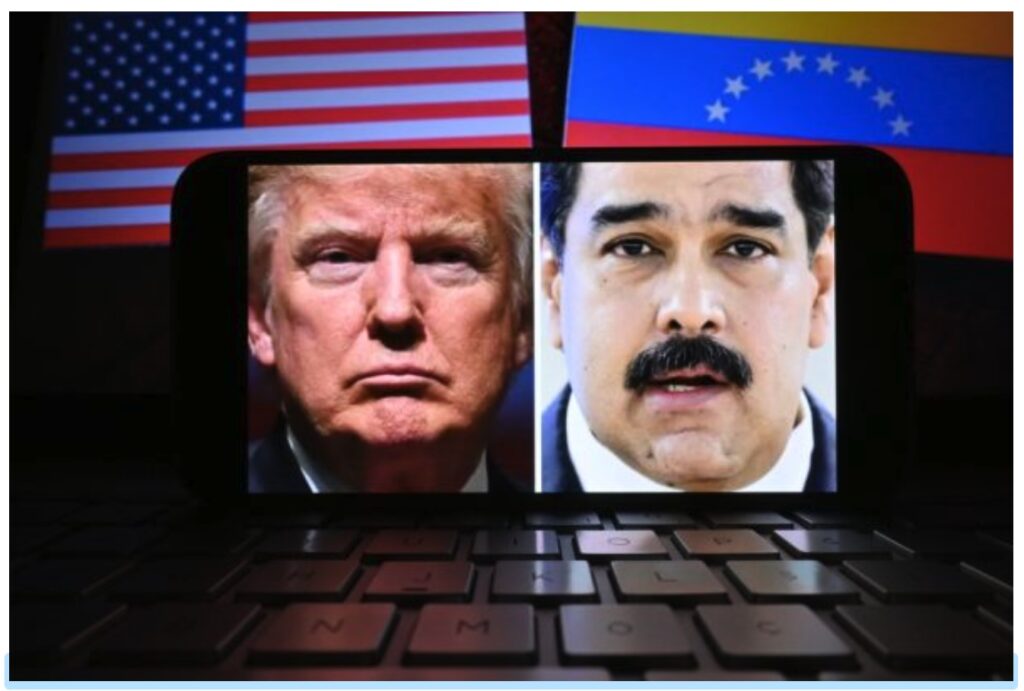
This analysis is necessarily preliminary, as the political developments involving the United States, Israel, and Venezuela continue to unfold. Nevertheless, some commentators have already expressed uncritical enthusiasm for the prospect of U.S. military intervention against Nicolás Maduro and his removal from power. The principal justification repeatedly advanced is the allegation that Maduro has been involved in drug trafficking. Even if such allegations were substantiated, they would scarcely constitute a legitimate rationale for the expenditure of millions—if not billions—of dollars to effect regime change, particularly in light of the well-documented involvement of the United States in the narcotics trade in Afghanistan over several decades.
In fact, even within the twentieth century alone, U.S. involvement in global drug policy has been extensively documented. Scholars such as James Tharin Bradford, for example, have shown that “the opium trade established between the United States and Afghanistan benefited from instability in the global market as a consequence of war.”[1] Peter Dale Scott of the University of California has documented over several decades that “in Afghanistan, as in Central America, the White House and the CIA chose to look the other way while their allies sold vast quantities of drugs to the U.S. market.”[2]
Scott has further argued that, under the pretext of national security and covert operations, the U.S. government has repeatedly collaborated with, and in some cases protected, major international drug traffickers. Other scholars, most notably Alfred W. McCoy of the University of Wisconsin–Madison, have documented comparable patterns of the U.S. complicity in the global narcotics trade.[3] Consequently, the claim that Maduro must be deposed on the grounds that he has been responsible for infiltrating the United States—and perhaps the wider world—with illicit drugs is analytically unsustainable.
This has not prevented commentators such as Ann Coulter from endorsing the view that Maduro warrants removal from power. In a post published last month on her Substack, Coulter argued that “cocaine has killed 100,000 Americans in the last 20 years” and that Venezuela constitutes “a major player in the supply chain” responsible for this harm. She further asserted that U.S. Democrats are primarily concerned with protecting what she described as “narco-terrorists,” framing the issue within a highly polarized partisan narrative.[4]
Even if one were to grant Coulter’s central claim for the sake of argument—namely, that Maduro functions as a “narco-terrorist”—her analysis remains strikingly selective. Why restrict the temporal frame to the past two decades, while omitting earlier periods in which the United States was demonstrably implicated in the global narcotics economy, particularly in Afghanistan? Moreover, Coulter does not address the possibility of U.S. responsibility in shaping or sustaining the very drug-trafficking networks she condemns, despite substantial historical evidence of American involvement extending back at least to the mid-twentieth century.
This omission is not incidental. Acknowledging such responsibility would undermine the rigid Democrat–Republican binary upon which Coulter’s political commentary has long depended. That binary, arguably, has structured her work since her vocal support for the 2003 invasion of Iraq, during which she advanced a series of increasingly strained justifications for U.S. military intervention across multiple publications. If this line of argument appears speculative, it is instructive to consider Ann Coulter’s own statements from 2005, made just two years after the U.S.-led invasion of Iraq:
“I think the government should be spying on all Arabs, engaging in torture as a televised spectator sport, dropping daisy cutters wantonly throughout the Middle East, and sending liberals to Guantanamo.”[5]
If further illustration is required, Coulter’s argument becomes even more explicit in her book In Trump We Trust, where she asserted that “Obama has turned our victory [in the Iraq war] into a defeat and the birthplace of ISIS.”[6] She attributed this outcome to the Obama administration’s decision to withdraw U.S. troops from the region.
Coulter nevertheless omitted a critical contextual fact: President George W. Bush himself signed an agreement stipulating that U.S. forces would be withdrawn from Iraq by 2011![7] This omission significantly weakens her attribution of responsibility, as the withdrawal timeline was established under the Bush administration rather than unilaterally initiated by his successor.
Coulter’s commentary, viewed over time, reflects a consistent rhetorical pattern rather than a sustained analytical framework. Her central claim is that adverse developments within the United States and across the Middle East are primarily attributable to “liberals.” This logic is reinforced by her repeated assertion that, were Democrats sufficiently rational, they would simply become Republicans.[8]
Coulter exemplifies a strand of unapologetically interventionist rhetoric that has found resonance within the Jewish Neocons and supporters of Israeli wars. Adopting a confrontational and provocative tone, she wrote: “If we were 100 percent consistent with foreign policy, there are a lot of other countries we’d be invading besides Iraq.”[9]
Although Coulter has moderated her overtly interventionist rhetoric in recent years, the underlying ideological commitments remain discernible. The same logic that once justified expansive military intervention continues to resurface, albeit in a more restrained form, in her commentary on figures such as Nicolás Maduro.
This pattern is not novel in Coulter’s work. Even after the Iraq War had come to be widely regarded as a strategic and humanitarian failure, Coulter—alongside commentators such as Thomas Sowell and Victor Davis Hanson—continued to publish works defending the intervention. In doing so, she advanced claims such as the assertion that “the magnificently successful Iraq War has been rewritten as a failure,”[10] a reinterpretation she attributed primarily to Democratic political actors. With respect to Iraq, Coulter further asserted in the same book that the United States had achieved decisive success, claiming that it had “won, executed a dictator, presided over democratic elections, and killed loads of al Qaeda fighters.”[11]
It is difficult to understand how any analyst with an ounce of common sense could employ such language, unless “winning” is understood to mean the widespread devastation of Iraq, where social disintegration was so extreme that women and even teenagers were compelled to sell their bodies in order to survive. Listen to Coulter again: “If we are building democracy in a country while also making America safer—such as in Iraq—Democrats oppose it with every fiber of their being.”[12]
Although Coulter has tempered her interventionist rhetoric in recent years, her earlier immersion in neoconservative discourse continues to shape her outlook, particularly in her enduring support for regime change against so-called dictators, despite the significant political, economic, and social costs borne by the American population.
Manufacturing Regime Change in Venezuela
What, then, might plausibly explain the interest of the United States—and possibly Israel—in seeking Maduro’s removal from power in the first place? Corruption is an unconvincing explanation, not least because the United States has historically maintained alliances with regimes exhibiting levels of corruption equal to or exceeding those attributed to Maduro. A more politically salient factor may be Maduro’s longstanding and explicit criticism of Israel. In this respect, he parallels figures such as former Syrian president Bashar al-Assad, who likewise opposed Israeli policies. As recently as June of last year, Maduro expressed this stance in unequivocal terms, stating:
“We express our categorical rejection and repudiation of the criminal attack against the people of Iran, perpetrated by the government of the State of Israel, which violates international law and the Charter of the United Nations. Furthermore, it threatens the Middle East on a scale we cannot imagine. Our absolute solidarity goes out to the peoples of Iran, Palestine, Yemen, Syria, and Lebanon. Our solidarity and support for the pursuit of peace goes out to all Muslim and Arab peoples.”[13]
In 2024, Maduro attributed much of the political unrest in Venezuela to what he described as “international Zionism.”[14] By July of last year, Maduro reiterated and intensified his criticism of the Israeli government, stating: “Every bomb dropped on a Palestinian hospital, school, or home not only kills innocent lives but also undermines the foundations of world peace and accelerates the moral collapse of the international order.”[15]
Maduro further contended that many citizens in Venezuela had previously united to articulate what he described as a “moral and political response to the atrocities being committed against the Palestinian people amid unprecedented impunity.” He added, “We raise our voices with determination and anger at the world’s silence in the face of the ongoing genocide against the Palestinians.” According to Maduro, Israel’s actions against the Palestinian population do not constitute “a conflict between equal parties,” but rather represent “a systematic plan to destroy a people and erase their identity.”[16]
“The massacre against the people of Palestine is a massacre against all of us,” Maduro continued to say. “It is a massacre as a show of force, so that the people of the world will surrender.”[17]
When Israel carried out military strikes against Iran in June of last year, Maduro was among the first political leaders to condemn the action, describing the Israeli government as “the Hitler of the twenty-first century” and characterizing the Iranian people as “noble and peaceful.”[18] Maduro’s criticism of Israel has recently been noted by Marjorie Taylor Greene, a former ally of Donald Trump. Greene tweeted:
“Venezuela is a predominantly Catholic country with very strong laws against abortion with the exception being the life of the mother. Maduro has been critical of Israel calling it a genocide in Gaza and against Zionism. Maduro’s opposition, Maria Corina Machado is a strong supporter of Israel and wants to restore strong relations with Israel. She is more left leaning on abortion and LGBTQ issues. Most Americans I talk to are not buying that this is really about drugs and sanctioned oil takers. And it’s not about social issues, I just added that to highlight some differences in the two leaders. People voted in 2024 against foreign intervention and foreign regime change as we have seen far too many times how that’s turned out, it’s not good, and people are so sick of it.”[19]
From this perspective, Maduro’s increasingly outspoken criticism of Israel appears to have significantly heightened his political vulnerability. The previously invoked justification—namely, allegations of involvement in drug trafficking—fails to withstand scrutiny, particularly given the extensive historical record documenting U.S. participation in, and benefit from, the global narcotics economy. If that rationale is insufficient or unpersuasive, one is left to consider alternative explanations. A plausible interpretation is that the Trump administration acted in strategic alignment with Israeli interests in seeking Maduro’s removal from power. This interpretation gains further support from the fact that, following Maduro’s removal, Israeli officials and commentators publicly characterized the development as a positive and welcome outcome.[20]
The Jerusalem Post itself has reported that “Israel commends US operation that led to capture of Venezuela’s Maduro.” We are told that “the Commanders for Israel’s Security, an NGO of more than 550 retired senior officials from the IDF, the Mossad, the Shin Bet, the police, and the Foreign Service, also welcomed the operation, seeing it as a warning to the Iranian regime, Israeli outlet Maariv reported.”[21]
Venezuelan Vice President Delcy Rodríguez has likewise asserted that Israel played a role in what she described as a Zionist-backed effort to remove Maduro from power. According to her statement, Rodríguez implicated Israel in the U.S. military operation that targeted Venezuelan state infrastructure and resulted in the capture of President Nicolás Maduro and First Lady Cilia Flores.[22]
This raises a broader question of credibility: to what extent should official U.S. narratives be accepted at face value, given the historical record of misleading justifications for the removal of foreign leaders and military interventions abroad? Relatedly, Trump’s actions toward Venezuela invite scrutiny with respect to the coherence of the so-called “America First” doctrine. It is difficult to reconcile an interventionist foreign policy aimed at destabilizing or dismantling other states with ideological claims centered on national cohesion or ethno-national preservation. Historical precedents underscore this tension. Following the U.S.-led invasion of Iraq in 2003, for example, the destruction of state institutions contributed to large-scale displacement, prompting significant migration flows to Europe—including countries such as France and the United Kingdom—as well as to Australia and other regions.
At this point, figures such as Jared Taylor have tended to deflect from the structural causes of migration by reframing the issue in terms of a purported “Muslim invasion” of Europe. Such accounts conspicuously omit sustained discussion of the role of Jewish or Israeli perpetual military interventions in the Middle East or of well-documented historical episodes of Western interference, such as the Anglo-American overthrow of Iran’s democratically elected prime minister, Mohammad Mossadegh. The underlying inconsistency is difficult to ignore: while Taylor and those aligned with his views often emphasize the desire for cultural or political separation, they rarely extend this principle to other nations’ claims to sovereignty or self-determination.
These tensions were among the issues I raised in my exchange with Kevin MacDonald, particularly with respect to the legacy of the British Empire and the manner in which it was subsequently rationalized and advanced by Darwinist thinkers. MacDonald’s response amounted to a dismissal of the issue as irrelevant—summarized in his remark, “So what?”—thereby sidestepping the historical fact that figures associated with Darwinism not only accommodated but actively supported imperial expansion.
Notes
[1] Bradford, Poppies, Politics, and Power, 74.
[2] Peter Dale Scott and Jonathan Marshall , Cocaine Politics: Drugs, Armies, and the CIA in Central America (Berkeley: University of California Press, 1998), 4-5.
[3] Alfred W. McCoy, The Politics of Heroin: CIA Complicity in the Global Drug Trade (Chicago: Chicago Review Press, 2003).
[4] https://anncoulter.substack.com/p/innocent-venezuelan-fishermen-hands?utm_source=substack&utm_medium=email .
[5] Ann Coulter, “Live and Let Spy,” AnnCoulter.com, December 21, 2005.
[6] Ann Coulter, In Trump We Trust: E Pluribus Awesome! (New York: Sentinel, 2016), 6.
[7] Glenn Greenwald, “About that Iraq withdrawal,” Salon, October 22, 2011.
[8] Ann Coulter, If Democrats Had Any Brains, They’d Be Republicans (New York: Crown Forum, 2007).
[9] Coulter, In Trump We Trust, 62.
[10] Ann Coulter, Never Trust a Liberal Over 3—Especially a Republican (Washington: Regnery Publishing, 2013), kindle edition.
[11] Ibid.
[12] Ibid.
[13] Randolph Borges, “Maduro on Israeli aggression against Iran: ‘This madness must stop,’” https://en.ultimasnoticias.com.ve/politics/Maduro-on-Israeli-aggression-against-Iran%3A-This-madness-must-be-stopped./ .
[14] Philissa Cramer, “Venezuela’s Maduro blames ‘international Zionism’ for unrest after disputed vote,” Times of Israel, August 8, 2024.
[15] https://www.globalsecurity.org/military/library/news/2025/07/mil-250716-presstv05.htm .
[16] Ibid.
[17] Ibid.
[18] “Venezuelan president condemns Israel’s attacks on Iran as ‘neo-Nazi Zionism,’” Al Jazeera, June 14, 2025.
[20] Liza Rozovsky, “Israel Welcomes Trump’s Attack on Venezuela as a Blow to the Iranian Axis,” Haaretz, January 3, 2026.
[21] Sam Halpern, “Israel commends US operation that led to capture of Venezuela’s Maduro,” Jerusalem Post, January 3, 2026.
[22] Michael Starr and Mathilda Heller, “Venezuelan VP: US attack capturing Maduro has ‘Zionist overtones,’” Jerusalem Post, January 3, 2026.